Your operation needs consistent cleaning schedules tailored to specific risks, daily throughput, food allergens, and inspection schedules, including auditable records confirming food safety measures, compliance audits, and health department standards. The details below give details about essential cleaning protocols.
Main Points
- Food safety cleaning experts from Brampton support restaurants, grocery departments, commissaries, warehouses, bakeries, schools, mobile vendors, and allergen-sensitive operations.
- They treat frequently contacted areas, food-contact equipment, kitchens, floors, drains, restrooms, and storage areas using zone-based workflows to reduce cross-contamination.
- Recording of finalization through tests, assessments, and corrective-action records validates trained specialists have validated proper chemical concentration, appropriateness, and contact time.
- Effective sanitation calendars factor in hazard, throughput, format changes, incidents, and guidelines when designating regular, regular, and annual activities by section.
- Suppliers must demonstrate hazard analysis knowledge, public-health understanding, safety training training, coverage, testimonials, color-categorized equipment, and assessment-ready cleaning files.
What Brampton Venues Require Food Safety Cleaning?
Food safety cleaning is required for any Brampton facility that deals with, keeps, prepares, packages, or provides food. Apply it to your operation if it is subject to health inspections, food codes, or HACCP requirements. This includes restaurants, cafeterias, commissaries, grocery food departments, butcher shops, seafood counters, convenience stores, and institutional kitchens.
You also need compliant food safety cleaning in distribution centers, food processing plants, freezer facilities, commercial bakeries, educational nutrition programs, event spaces, and catering hubs. Temporary and mobile establishments count too, including mobile kitchens, festival sellers, and temporary food stands. If your staff work with raw supplies, divide prepared foods, warm dishes, or organize allergen inventory, your facility needs established sanitation documentation. In Brampton, sanitation isn't discretionary; it's part of legal, operational, and consumer protection compliance.
What Do Brampton Cleaning Professionals Handle?
You need professional cleaners who disinfect frequently contacted areas, kitchen areas, floors, and bathrooms to meet food safety and public health standards. They target these areas because they pose the greatest danger for contamination spread, slipping risks, and sanitation breaches.
Knowing their service areas allows you to confirm your operation's sanitation satisfies required standards and regulations.
Essential High-Touch Surface Sterilization
develop a cleaning protocol
validate that cleaning is adequate and enable corrective actions if results come outside target ranges
Kitchens, Floors, and Restrooms
Brampton cleaning professionals will address kitchens, floors, and restrooms since each space presents separate hygiene concerns, slip-and-fall, and public health challenges. In industrial kitchens, you need degreasing on cook lines, equipment exteriors, drains, prep surfaces, and splash zones to minimize bacterial growth and pest activity.
Floor care that is recorded should equally be anticipated. Technicians scrub and extract buildup from tile grout, ceramic surfaces, and vinyl floors, then apply appropriate drying controls so you can reduce slip incidents and maintain code-compliant conditions. They also handle entryways where moisture and debris migrate indoors.
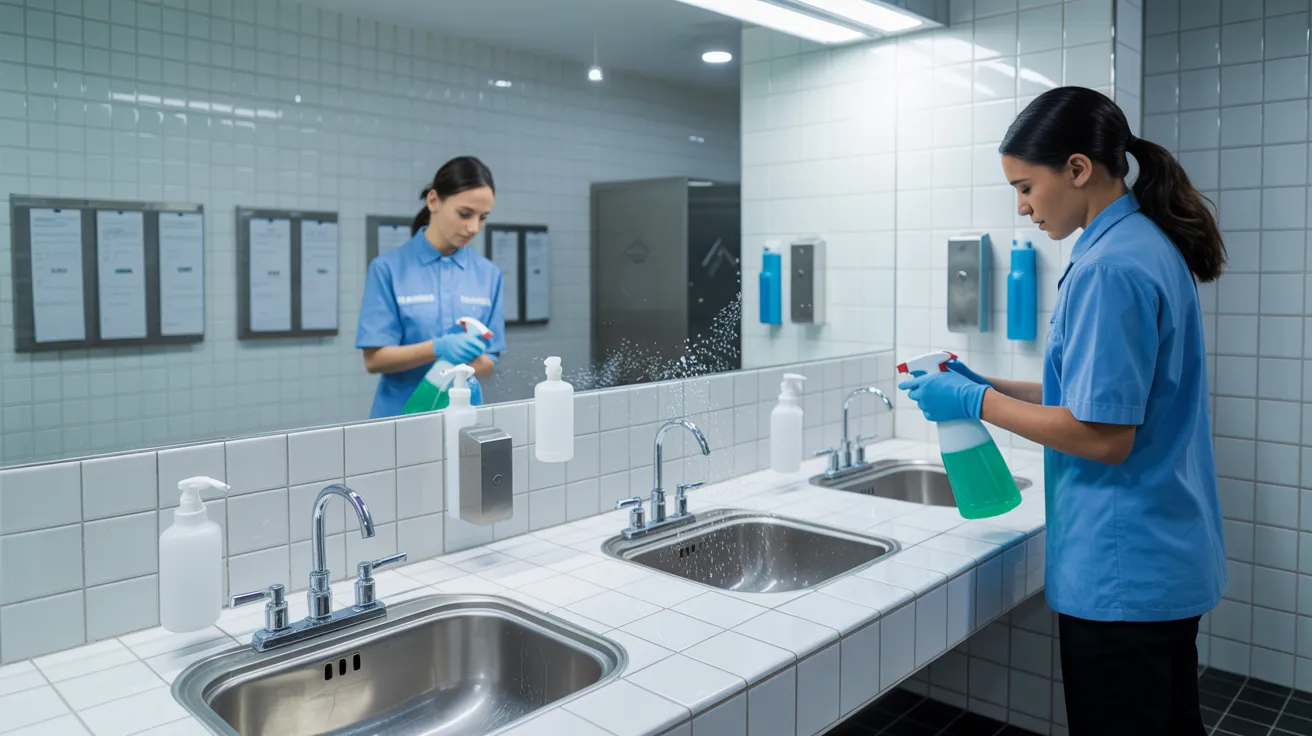
Restroom sanitation requires disinfecting touchpoints, fixtures, partitions, dispensers, and waste containers, replacing items and managing smells. They also service restaurant moprooms, where chemical storage, sink hygiene, and drainage conditions can affect sanitation compliance and staff safety daily.
The Importance of Food Safety Cleaning in Brampton
Brampton facilities demand food-safe cleaning standards to fulfill compliance obligations and pass inspections. You also reduce bacterial spread through proper cleaning of food-preparation surfaces, appliances, and frequently-touched items. Most importantly, you safeguard community wellness by reducing the chance of food poisoning in your establishment.
Food Safety Regulations
Because Brampton food operations operate under mandatory safety protocols, food safety cleaning directly impacts your competence to adhere to health code requirements, safeguard customers, and eliminate enforcement action. You must maintain hygienic food handling zones, recorded sanitation plans, safe chemical management, and documented employee protocols that align with municipal and provincial inspection expectations.
During inspections of your operation, officials analyze if your sanitation system ensures protected inventory management, machinery hygiene, garbage disposal, and washroom maintenance.
Cross-Contamination Prevention
Meeting health code standards also depends on your capacity to stop cross-contamination during routine food preparation and sanitation. You must separate raw ingredients from ready-to-eat foods, clean work areas after each use, and keep cleaning products separate from food areas. Established guidelines minimize contamination chances and ensure ongoing adherence to health checks.
You should implement allergen segregation to keep priority allergens from contacting common work areas, storage bins, or tools. Use dedicated cutting boards, color-coded tools, and careful equipment identification so employees avoid combining products during preparation or service. Require handwashing after handling uncooked proteins, shellfish, egg items, or allergen products. Replace wiping cloths regularly, and check disinfectant potency using test kits. When you train staff to follow these controls every shift, you create a cleaner, safer operation that satisfies Brampton's safety standards daily.
Public Health Defense
If proper sanitation deteriorates, you don't merely face potential inspection issues—you boost the probability of pathogenic contamination affecting customers, staff, and the broader Brampton area. You also undermine your responsibility in protecting public health, especially in busy food facilities where contamination can spread quickly through surfaces, equipment, and touchpoints.
You require sanitation protocols that remove contaminants, disinfect correctly, and confirm effectiveness. This involves adhering to exposure times, employing authorized sanitizers, logging schedules, and training employees to meet health-unit expectations. These controls promote disease prevention by decreasing microbes before reaching food or hands. Across Brampton, effective sanitation safeguards vulnerable groups, reduces disease potential, and demonstrates accountability. When you maintain proper protocols, you go beyond requirements—you meaningfully reduce risk and facilitate secure food handling throughout the area.
How Can Cleaning Practices Ensure Food Safety Compliance?
Thorough cleaning protocols ensure food safety compliance by decreasing contamination threats, controlling pathogen growth, and keeping your facility aligned with sanitation requirements under HACCP-based programs and public health regulations. You verify that food-handling surfaces stay visibly clean and microbiologically controlled, backing documented preventive controls and inspection readiness.
Cleaning efforts additionally upgrade allergen mitigation by removing residues that can lead to undeclared allergen exposure.
Determining When to Plan Commercial Cleaning
high-volume production periods, product switches, spillage events
Deep seasonal cleaning is most effective during shutdowns, weather-related soil buildup, or pest-pressure periods
Finding Quality Brampton Cleaning Experts: A Guide
Screen providers initially by their food-safe sanitation requirements—not budget alone. You need to confirm that every company meets CFIA, public health, and HACCP standards for your operation. Demand insurance verification, WHMIS compliance, training records, and management systems. Evaluate technician understanding of contamination dangers, chemical safety, and documented sanitation practices.
Additionally, you need to evaluate service dependability and responsibility. Obtain references from food facilities in Brampton, then review response times, corrective-action procedures, and communication practices. Verify the company supports supplier audits and can deliver compliance-ready records when inspectors or external parties need proof. Verify equipment upkeep, colour-coded tools are applied correctly, and location-specific dangers are identified. A capable service ensures compliance, product quality, and your reputation.
Which components are contained in a hygiene cleaning program?
Create a documented strategy that clearly outlines every sanitation task, standard, and responsibility before production starts. You should document cleaning schedules, authorized products, mixing ratios, exposure periods, equipment, and testing procedures for each area, section, and machine. Be sure to include pre-operational inspections, corrective actions, and employee training requirements.
Your plan should also address prevention of contamination, waste management, pest-control tactics, and scheduled records for restrooms, drains, floors, and food-contact areas. Outline how you'll separate raw and ready-to-eat processes, support ingredient tracking, and keep accurate allergen labeling through validated cleaning between product changes. You should assign accountability, document signed records, and evaluate results against regulatory standards, HACCP controls, and customer requirements. When gaps appear, modify procedures immediately and instruct staff.
Frequently Posed Questions about the Plan
Will sanitation providers handle nighttime hours at Brampton facilities?
Yes, you can contract sanitation providers to handle overnight shifts in Brampton facilities. You'll arrange nighttime cleaning around operational windows, access requirements, and personnel requirements. Providers generally establish overnight procedures to prevent disruption, copyright compliance, and log completed work. You should verify response times, management, access procedures, and waste management before service starts.
Do sanitation professionals provide emergency spill response services?
Yes, you can locate Brampton cleaning professionals providing hazard containment services. They handle hazardous incidents, evaluate risks, contain affected zones, and begin swift decontamination to reduce risk and prevent business disruption. You should confirm timeframes, credentials, PPE measures, and disposal methods. If your facility must adhere to regulations, select a service that tracks incidents, adheres to standards, and ensures audit compliance.
Are plant-based disinfectants safe for food preparation areas?
Yes, green disinfectants can be safe for food-contact surfaces if you pick disinfectants approved for food contact and satisfying regulatory requirements. You should check exposure duration, dilution rates, and rinse protocols before use. Many plant based formulas lower harsh chemical exposure, but you should gather confirmation of performance against specific pathogens. To preserve residue-free areas, you should adhere to exact manufacturer guidelines and ensure the cleaning agent adheres to food sanitation requirements.
Can cleaning plans be modified for production fluctuations?
Certainly, cleaning plans respond to seasonal variations effectively. Revise timing, personnel, chemicals, and testing procedures to fit with production rhythms while sustaining compliance standards. Limit production downtime by organizing sanitation around changeovers, peak volumes, and operational patterns. Further update SSOPs, instruction programs, and monitoring protocols to capture temporary risks, novel allergens, or increased soiling. Scheduled reviews keep your program effective.
Will professional cleaning services train your staff on sanitation best practices?
Certainly, commercial cleaners coach your staff on sanitation best practices. You obtain employee development on correct chemical practices, contact times, contamination control, machine disassembly, and documentation procedures. They generally coordinate coaching with HACCP, GMP, and CFIA or regional health bodies standards. Many also run health assessments to verify compliance, identify gaps, and reinforce corrective actions. This enables you to maintain consistent procedures, satisfy audits, and minimize foodborne pathogen risks daily.
Conclusion
Through working with Brampton food safety and commercial cleaning specialists, you do far more than tidy—you ensure your facility for audits and your procedures meet requirements. From kitchen spaces to processing areas, all clean areas and organized zones help prevent information pest problems and avoid major losses. Through booking service at proper intervals and sticking to a solid cleaning plan, you ensure protection for employees, clients, and your standing. In a tightly controlled regulatory landscape, proper sanitation cannot be considered optional—they represent good business practice.